Shanghainese red-cooked pork pot pies.
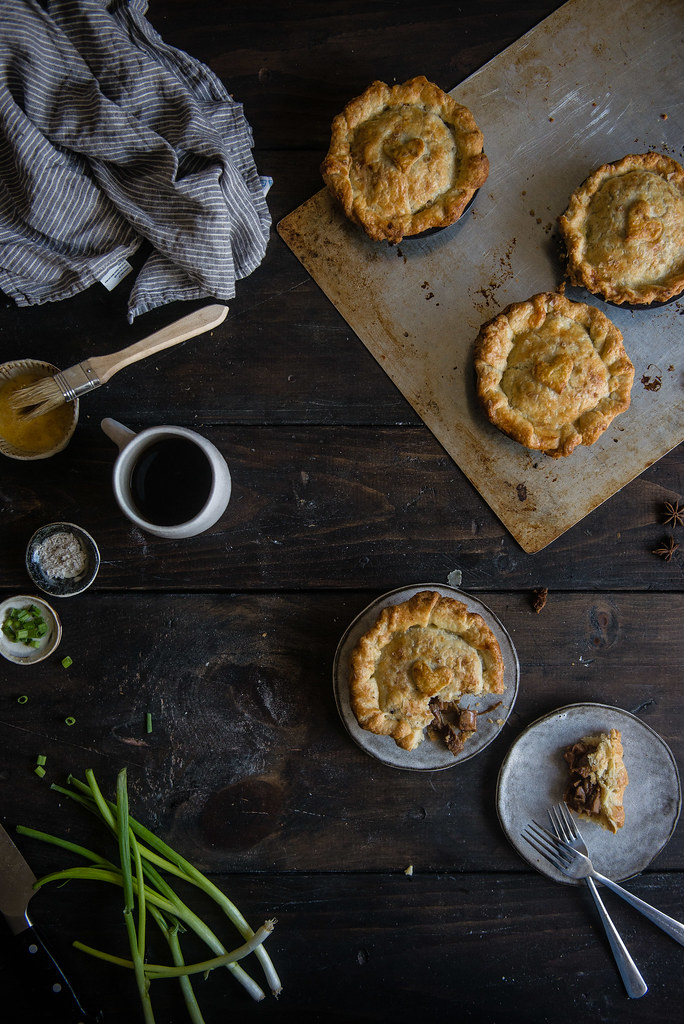
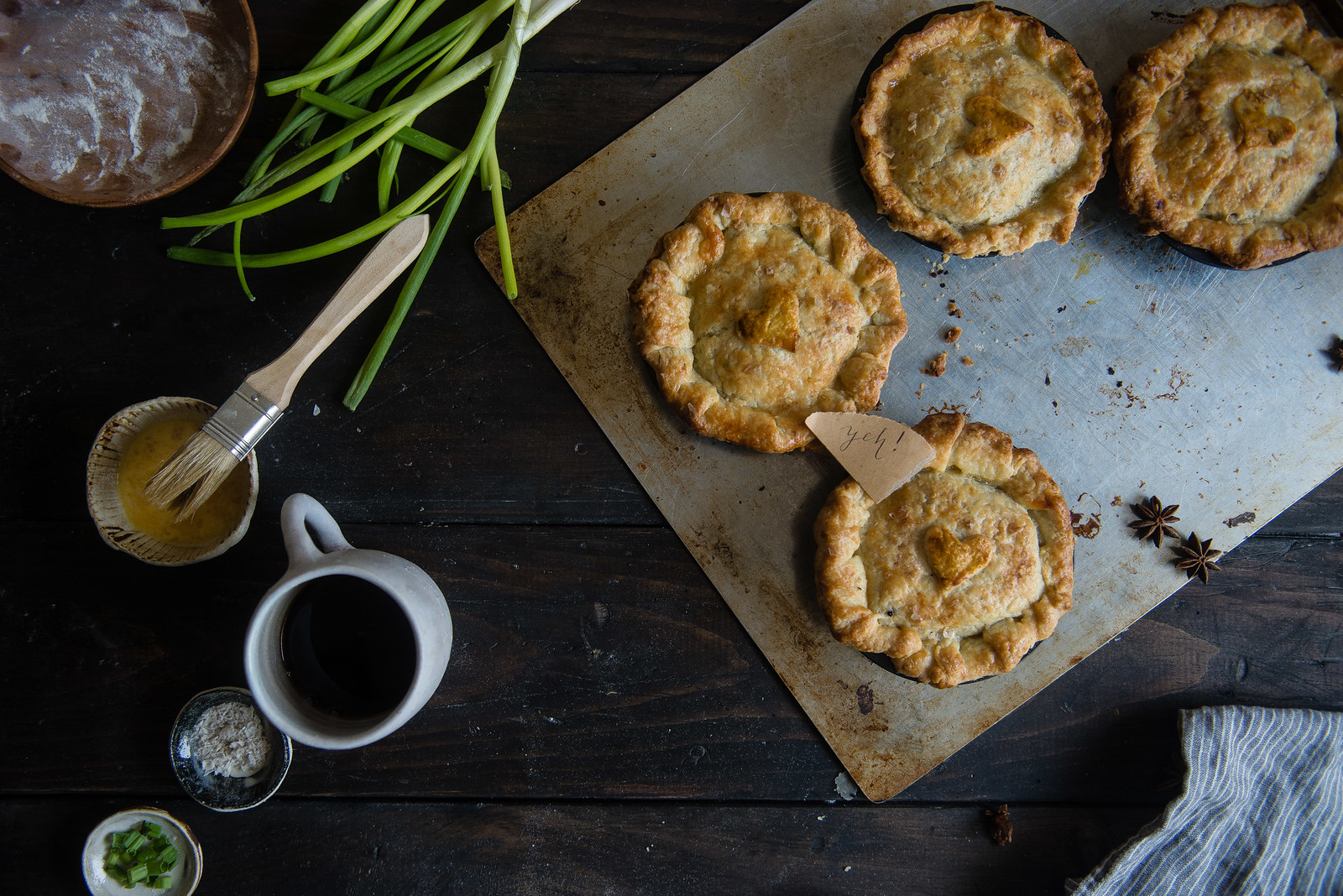

The most magical thing is happening this Saturday. The lovely, sunshiny Molly Yeh is getting married! It’s a winter wonderland wedding, right on her North Dakota farm, and bedecked in lace and snowflakes she’s going to be the most beautiful bride I could possibly imagine. I’m getting emotional about it. Egg wedding!
As scattered far and wide as we are, I always find it incredible how much we’re able to share in the special moments that happen in each other’s lives through this blogging thing we do, just through words and photos and the windows on our screens. Molly, being one of the warmest, most open-hearted (and creative) people I know, figured out a way to share it with us in the most meaningful way of all — pie! She invited us to send her pie recipes for her and her mama to bake and serve at her wedding — so that, even though we can’t be there to celebrate in person, our food (which, let’s be real, is pretty much a conduit of my existence) can. How awesome is that?
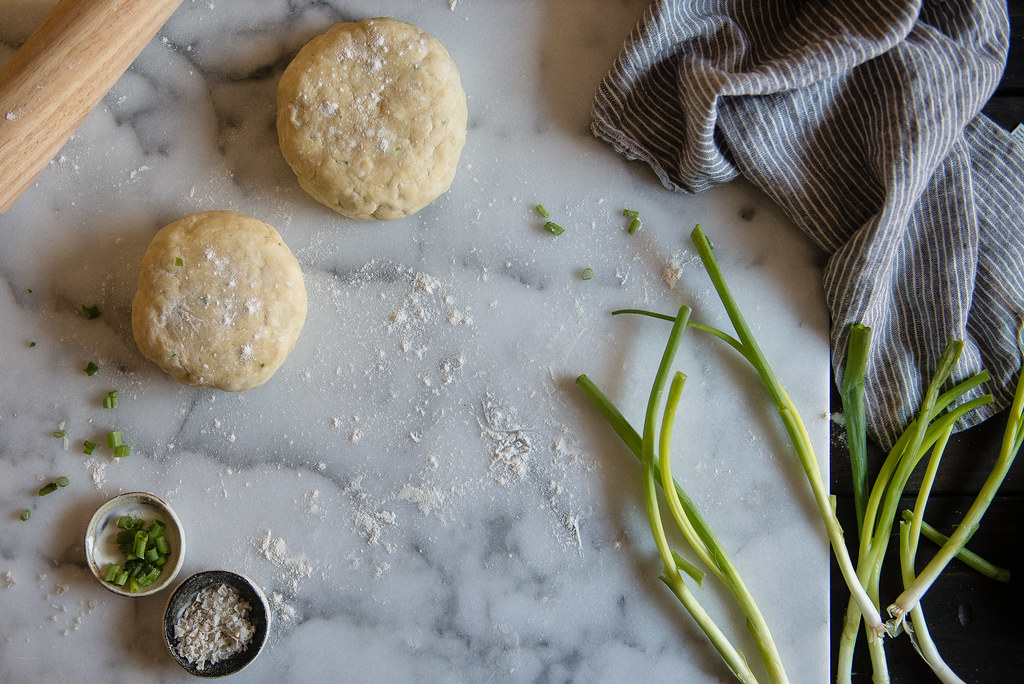
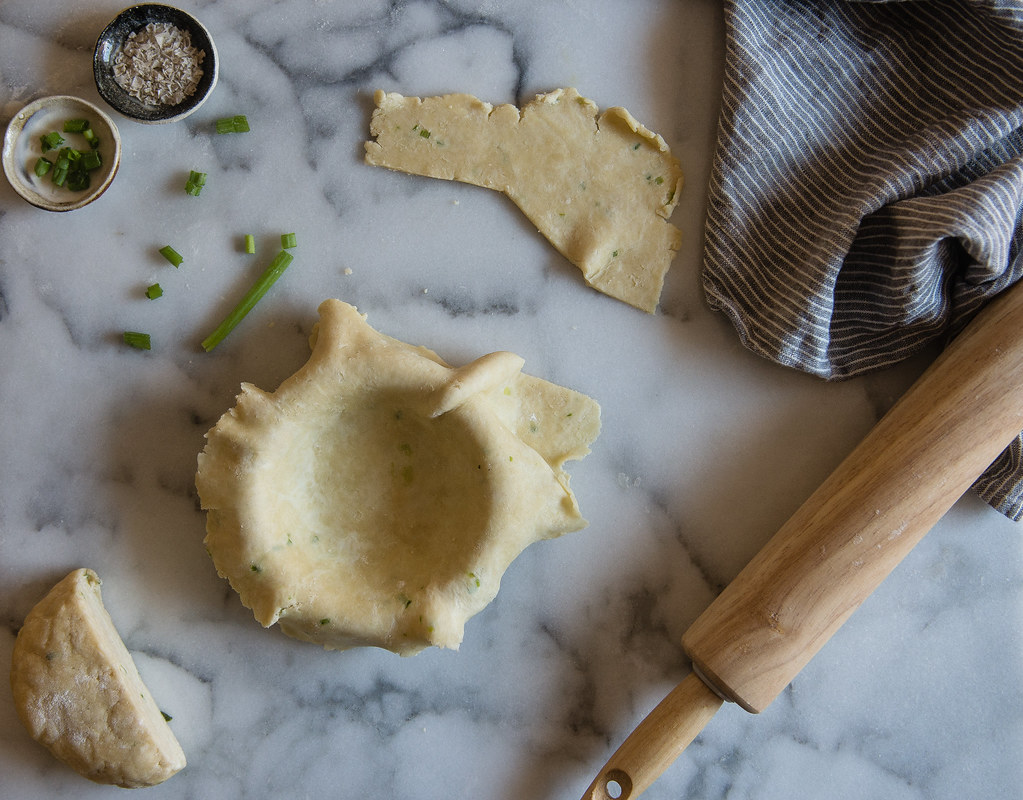
As homage to the master of the mash-up and her scallion pancake challah, these are East-meets-West pot pie love babies. The pie crust hides finely sliced scallions and a touch of Shaoxing rice wine in its flakes, which resulted in the best pie crust I’ve maybe ever made; the pies are filled with Shanghainese red-cooked pork, or hong shao rou, which I love both because it’s delicious and because it’s so fitting — red, after all, is the color of Chinese wedding celebrations.
Red-cooked pork is one of my all-time favorite dishes — it’s traditionally made with fat-laced pork belly, pan-fried in a bit of sugar until deliciously caramelized, then slowly braised (oh, how I love braised meat) in soy sauce and magical aromatics until fork-tender and coated in amber syrup. My favorite iterations serve it with hard-boiled eggs and knots of toothsome tofu skin to soak up all that pork flavor. For these, I went with a simple pork-only filling, and to balance out the buttery pie crusts, I used (barely) leaner pork ribs.
The result was even better than I expected. For an occasion as momentous as an egg wedding, I was pretty anxious about how these would taste, but it turns out that rich, flaky pie crust and savory-sweet, garlicky-soy meat fillings are meant to be together. It’s the best of both worlds: multi-culti, just like Molly. (Though I have to apologize to her Jewish guests for the pork.)
Molly, thank you so much for having us be a part of your day. It could not have been more fun or special to spend a cozy, butter-laden Saturday afternoon celebrating from afar. Wishing all the joy and happiness in the world to the most joyous, happy person I know and her Eggboy!

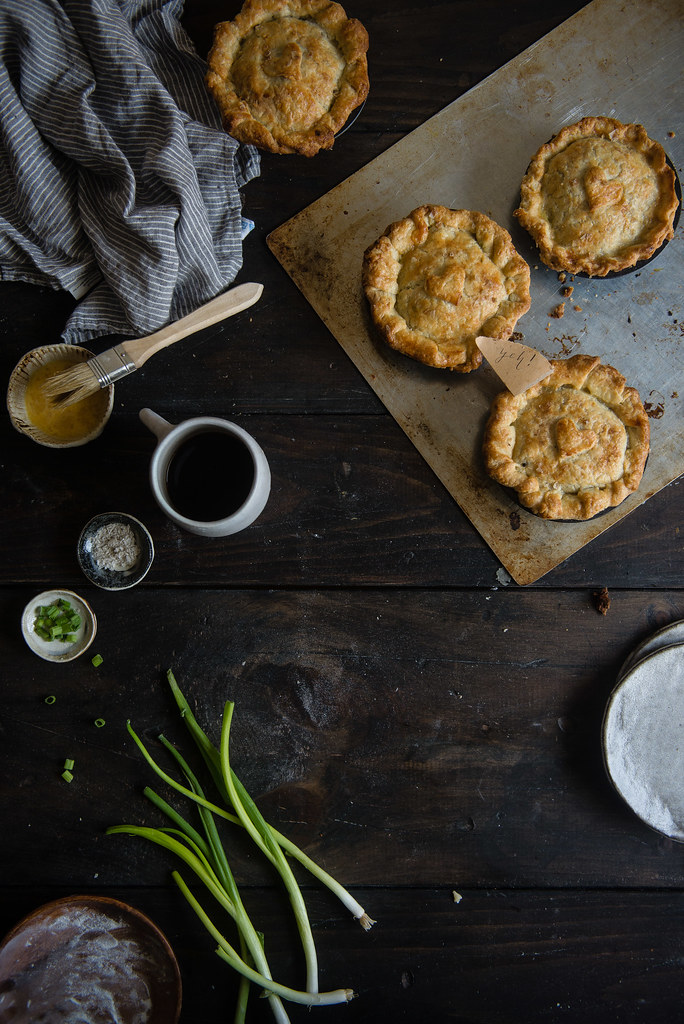
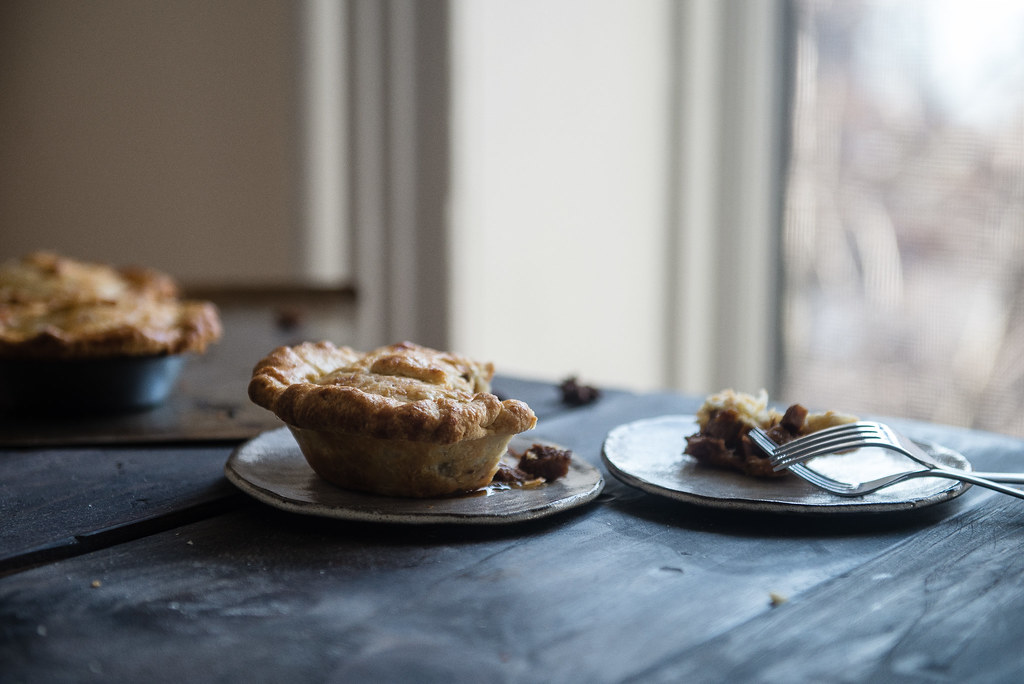

Yield: four 5-inch pot pies
For ease of preparation for the bride and her mother, but also for you, these can be made in several different steps, and all the components can be frozen before assembling, after assembling, or even after baking. I've noted where to freeze the individual parts. To bake an unbaked pie from frozen, cover the edges with foil to prevent burning, cut small vents in the top crust, and bake at 425 degrees for 15 minutes, then reduce heat to 350 and continue baking for 20-30 minutes or until golden brown and filling is bubbling. After reducing heat, check often to ensure it doesn't burn. To bake a fully baked pie from frozen, reheat at 350 degrees for about 30-40 minutes, checking every 5-10 minutes. Do not thaw in either case.
Ingredients
- for the pork:
- 1 3/4 to 2 lbs boneless pork ribs, cubed (regular pork ribs will also work; about 6 lb)
- about 3-4 cups water, or enough to cover the pork
- 1/3 cup sugar
- 6-8 cloves of garlic, sliced into halves
- 4-5 scallions, sliced into inch-long pieces
- 5 whole star anise
- 6 tbsp soy sauce (if possible, use half light and half dark, but this is not critical)
- 1/3 cup Shaoxing rice wine or sake
- 2-3 tsp cornstarch
- for the scallion pie crust: (or simply use 2 lb of your favorite pie crust!)
- 2 1/2 cups (about 313 grams) flour
- 1/2 tsp salt
- 2 tsp sugar
- 1 scallion, very finely sliced and patted dry
- 1 cup (2 sticks) frozen butter
- 2 tbsp ice water, plus 1 or 2 tbsp more in case dough is dry
- 2 tbsp ice cold Shaoxing rice wine, sake, or vodka
- for baking (optional):
- 1 egg
- a splash of milk
- flaky salt, for sprinkling
Instructions
- To make the pie crust: Remove the butter from the freezer and let it thaw briefly while you prepare the dry ingredients. Sift together flour, salt and sugar. Sprinkle the scallions over the mixture and mix briefly again to incorporate. Using the coarsest holes on a box grater, grate the frozen butter into the flour, then mix gently with your fingers to incorporate it into the flour until no clumps larger than peas remain. Sprinkle the ice water and rice wine evenly over the mixture and stir with a wooden spoon to incorporate. When the mixture holds together when squeezed, it has enough moisture. Knead gently a few times to gather it into a dough. Separate into two balls and pat each into a flat disk. Wrap each disk in plastic wrap and place in the refrigerator to chill for at least an hour and up to a day ahead. For longer than a day in advance, freeze the dough.
- To make the pork filling: Bring a large pot of water to boil and add the pork, making sure that there is enough water in the pot to cover it. Boil for about 5 minutes, skimming off any scum as it forms on top of the water. Drain the pork and rinse to remove any scum, then let cool. If the pork is in strips, slice into 1-inch pieces.
- In a large wok, combine sugar and 1/4 cup of the water over medium-high heat and stir until just dissolved. Continue to heat. The mixture will begin to bubble after a few minutes; swirl the mixture without stirring just until it begins to turn pale golden. Add the cubed pork back to the wok and sauté it with the caramelized sugar for about 4-5 minutes, or until pork is nicely browned.
- Add the garlic, scallions, star anise, soy sauce, and rice wine to the wok, then add just enough water to barely cover the pork. Stir, then cover the wok and simmer over low heat for about 45 minutes to an hour, or until the pork is tender. The liquid shouldn't simmer down too much, but if the pot looks like it's starting to boil dry, add enough water to cover the pork again. (Note: If you want to divide the labor between two days, you can store the pork overnight at this point. Letting it hang out in the braising liquid for an extended period of time only improves the flavor. Also, when I did this, I diced the pork into smaller pieces before reducing in the next step.)
- Once the pork is tender, remove the cover and turn the heat back to medium-high. Remove about 2 tbsp of the braising liquid and whisk the cornstarch into the liquid in a small bowl until incorporated. Set aside. Simmer until the sauce reduces to a thick and glossy consistency. For me, this takes about 10-15 minutes, depending on the amount of liquid. When the sauce has reduced significantly, add the cornstarch mixture back to the pork and stir to incorporate. When sauce is thick and viscous, turn off the heat and set the pork aside to cool. (Note: You can freeze the filling at this point.)
- To assemble: Remove the star anise and garlic from the pork filling. Dice some of the larger pork pieces into smaller pieces or shred using a fork. If you used ribs with the bone in, remove the bone. Preheat your oven to 400 degrees.
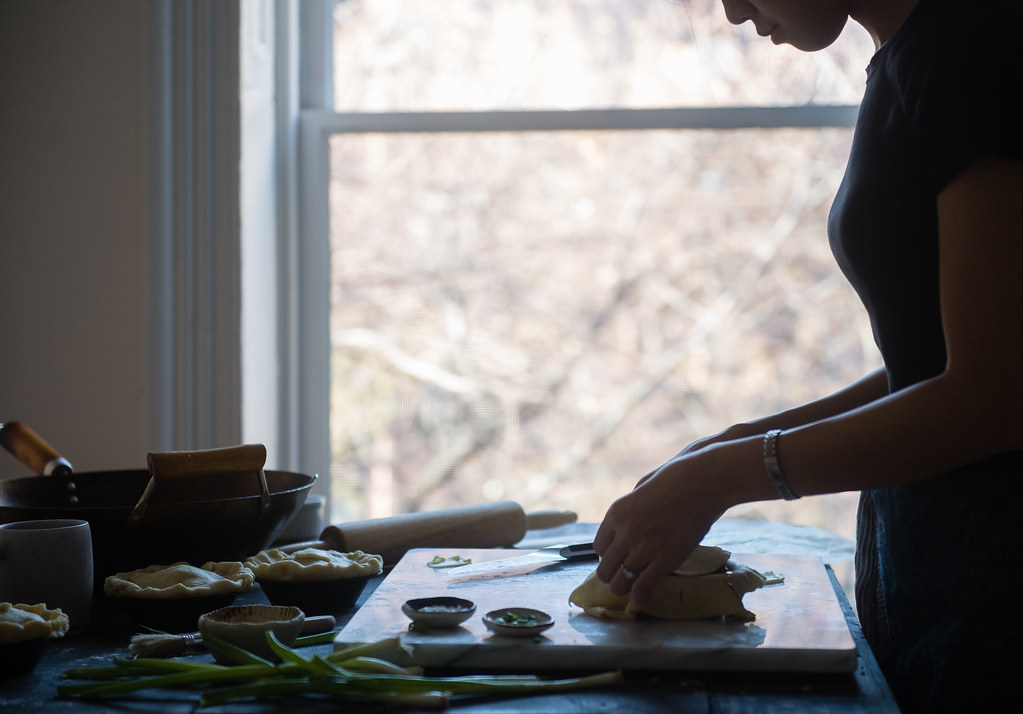
- Remove the pie dough from the fridge and let thaw for a few minutes. Place a portion of dough between two lightly floured sheets of parchment paper and roll it out to about 1/8-inch thickness. Remove the top sheet of parchment and cut into generous circles for the base of your pies, aiming to size the circles so that there is generous overhang on the edges once placed into the molds. Using the parchment paper, transfer the pie circles to the molds (turning the paper upside down and peeling the circle off works well for me). Repeat this step as necessary until all your molds are lined. Chill the other pie dough and assembled pie crusts while you work with the portion you have.
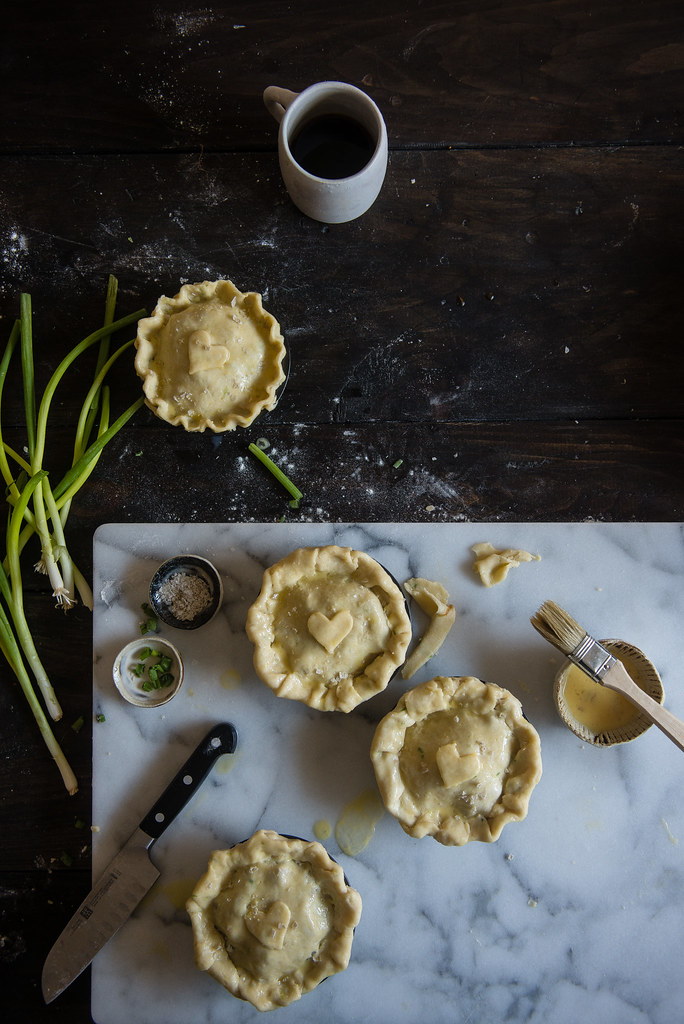
- Spoon in a generous helping of the pork mixture. For 5-inch pie pans, this was about 3/4 to 1 cup. Roll out your remaining pie dough and top the pies with smaller pie circles (about the same diameter as the mold). Fold the overhang from the bottom crust over the pie “lid” and crimp to seal. Use a fork to prick holes in the top. Optionally, you can beat an egg with a splash of water or milk and brush the pie crusts with egg wash, and/or sprinkle the crusts with a bit of flaky sea salt.
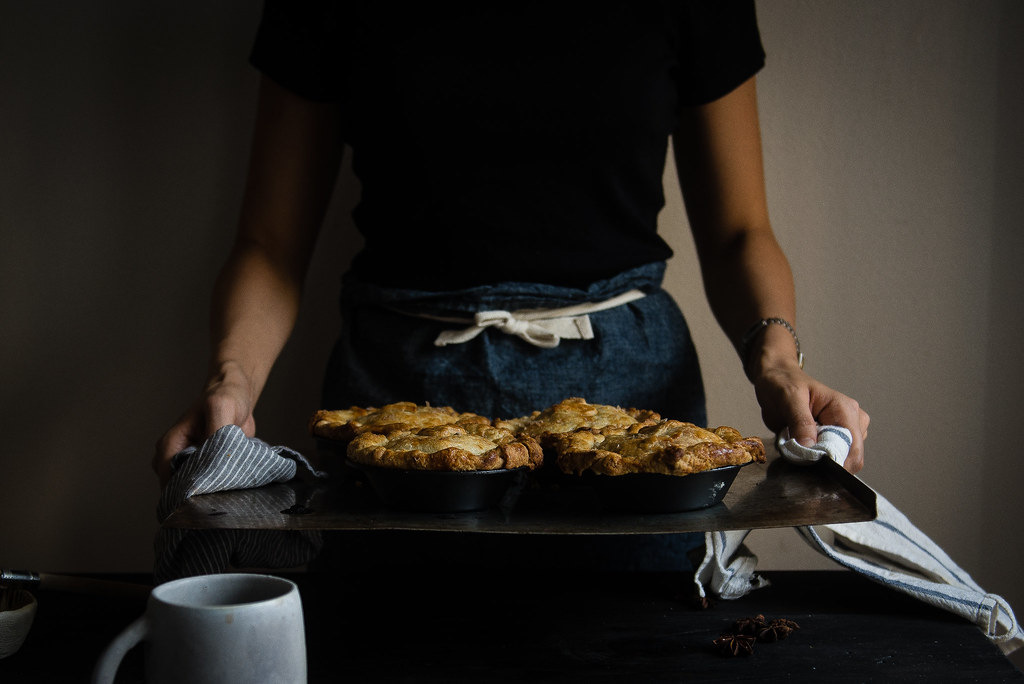
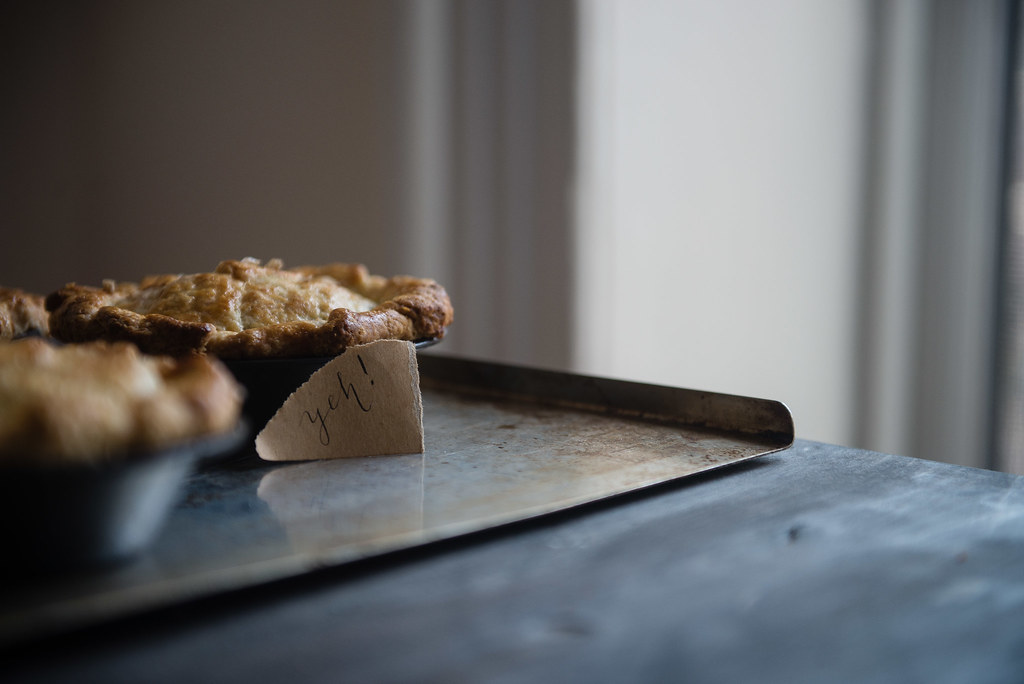
- Finally, bake at 400 degrees until golden brown on top, about 30-40 minutes. Let cool briefly and serve!
Notes
This does yield a fairly rich and heavy pie. For a more balanced dish, you can halve the amount of pie crust dough and make one-crust pies, with the crust on top only.
For these pies, I used these 5-inch Norpro miniature pie pans.
The post Shanghainese red-cooked pork pot pies. appeared first on Two Red Bowls.