An introduction to grinding grain for flour
by Aimee
Baking bread when I was growing up meant first slipping down to the basement larder and grinding the grain. The machine was absolutely deafening, but I loved the smell of freshly milled flour and the way it floated down to form miniature snowy mountains in my bucket.
My mother still grinds her own grains and regales me with tales of her spelt lasagna noodles and kamut pizza dough; as always, she’s years ahead of the current whole foods movement. I had quite a few tools and appliances that I needed to invest in when I set up my own kitchen and a grain mill was low in the list. It was there, though, for my ‘someday’.
Naturally I was very excited last fall when KitchenAid Canada provided me with a grain mill attachment to go with my beloved 7-quart stand mixer. It’s funny, I feel as though I have both traveled back in time to to that flour dusted larder floor and taken a step ahead into another level of baking with whole, unprocessed ingredients in my kitchen.

Why grind your own flour?
Most of your fiber, vitamins, minerals and antioxidants are found in the bran and germ of a wheat kernel – but this is the very part that gets removed in processed flours you find in supermarkets. Grinding your own flour ensures that you are baking with the most nutritious product possible.
Freshly ground flour contains the natural oils found in the grain which adds a lightness to baked goods that ordinary whole wheat flour does not contribute. As a caution, this also means that the home-milled flour needs to be used up quickly (within a day or two) or kept cold so the oil does not turn rancid. My mother always stored her ground flour in the refrigerator until we pulled it out for pancakes or the daily loaf.
Also, price can factor in, especially if you tend to cook with a lot of specialty or gluten free flours. These can be expensive to buy and it’s cheaper to buy the grains and grind them yourself as needed.
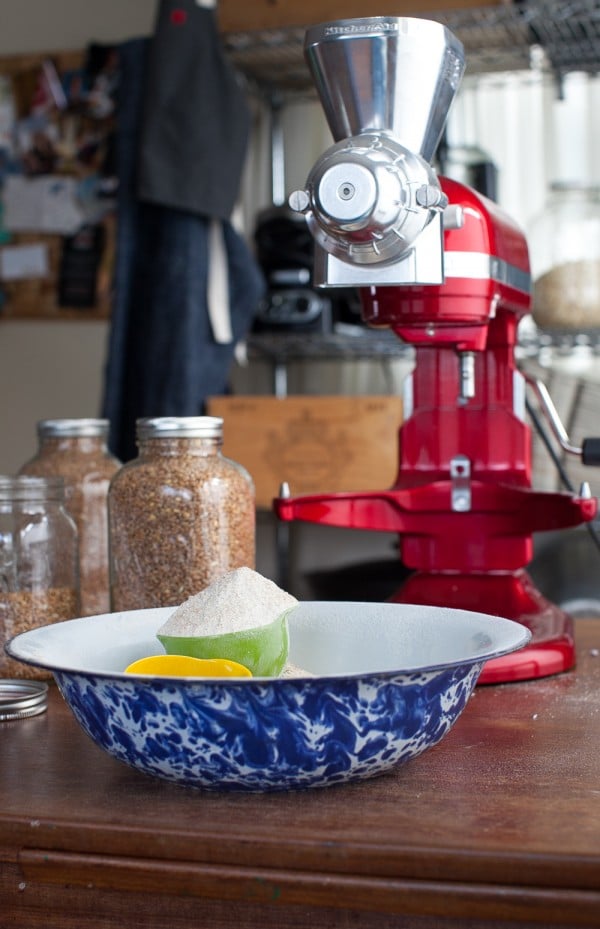
What grain to buy and where to find it
Whole grains can typically be soured at your local heath food store, although I admit, facing the bulk bins for the first time can be a little daunting. I remember whipping out my phone and calling my mother. Yep, I sure did. Um, Mom? Hard or soft wheat? What do I want for my daily loaf? Help!
I’m currently alternating between soft wheat (for pizza crust, muffins and all-purpose baking) and hard (for breads). I run the occasional batch of rolled oats for through for oat flour (for scones), but I have yet to branch out into the gamut of gluten-free and ancient grains. (Anyone know where I can buy Einkorn wheat berries in Canada?)
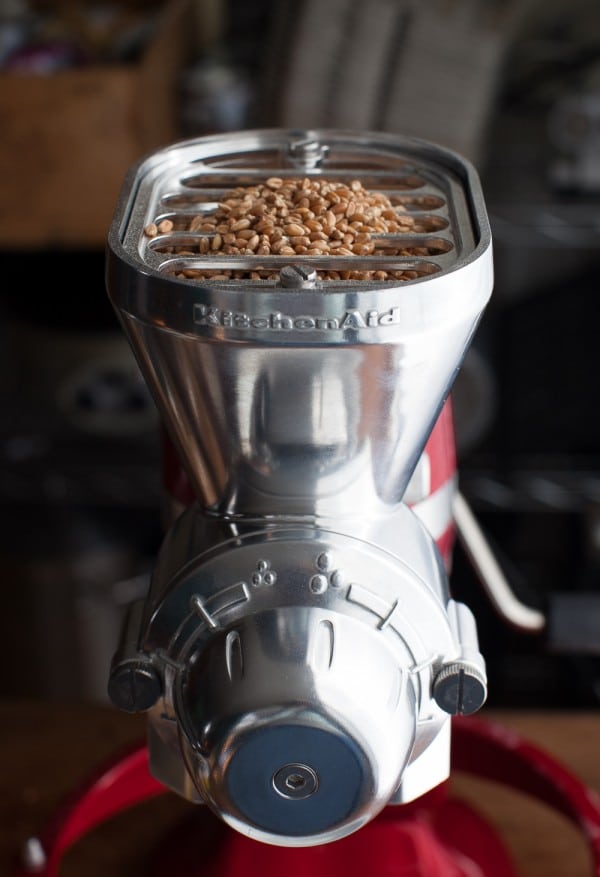
Grinding the wheat
My set up for the actual grinding process is as simple as switching from the whisk to the paddle attachment on a stand mixer. I love how KitchenAid keeps things so user friendly (I’m really not the mechanical type).
The all-metal grain mill attaches to the mixer and the grain goes straight in the hopper. Place a bowl underneath, plug the mixer in and turn it to maximum speed. Then sit back, watch the flour drift down and breathe in the aroma of freshly ground whole wheat flour. It’s a little bit magical, I have to say.
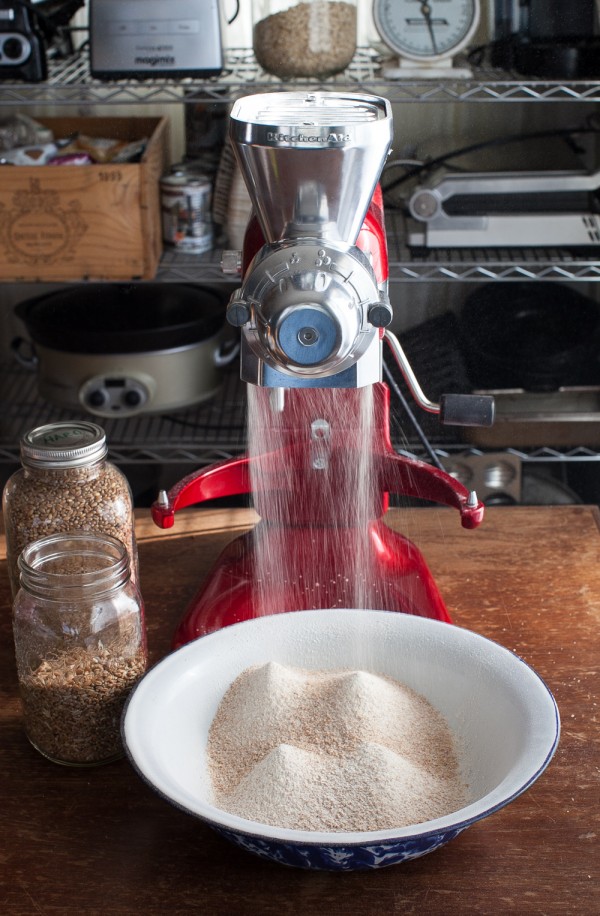
Pros of the KitchenAid Grain Mill attachment.
- It is small to store. One of the biggest complaints I have heard about stand-alone grain mills is that they are very large (bigger than an average KA mixer, in fact). I just don’t have the space to store another large appliance, which is why an attachment works best for me.
- It works clean. The grain grinds up with very little dust.
- It’s quiet. Compared to the deafening noise of most grain mills.
- It’s user-friendly. As mentioned above.
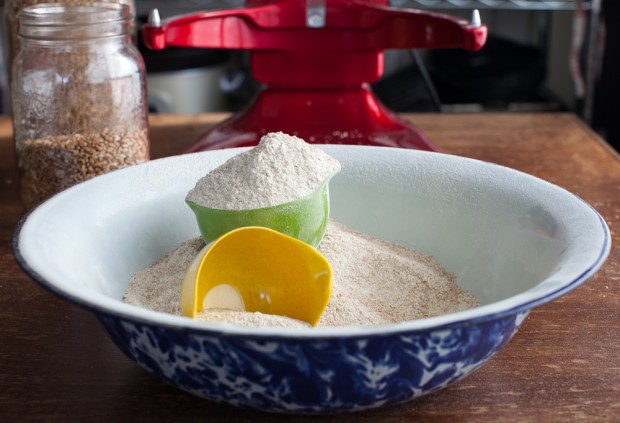
What about mass production?
I’ve read a lot of the forums on this particular attachment and there are concern about long-term use of the KitchenAid grain mill as well as wear and tear on the mixer itself. While I can’t speak from experience, my guess is that this attachment is best for smaller batches of flour. My Pro Line 1.3 HP mixer has never even warmed slightly during a grind, but it would be interesting to see how the smaller models held up.
We’re not gluten free, low carb or Paleo by any means, but we are eating less and less bread and baked goods. I’m finding that when I do bake, I want to use the freshest, best product I can and for now that means grinding my own grains. I know this attachment is hefty enough to keep up with our weekly demand and I’m looking forward to expending our repertoire of home ground flours – with my mother’s input of course.
DISCLOSURE:
KitchenAid Canada has compensated me for my services and my posts, but all posts represent my own opinion.
Are you interested in grinding your own grains? Have you ever ground your own flour?
CURRENT SPONSORS:
- No More To Go - Healthy Meal Plans.
- Thrive - Your favorite foods. REDEFINED.
- Easy Homemade - Homemade pantry staples for the busy modern family.
- Smart Sweets - 30 desserts to indulge your sweet tooth..
is a post from Simple Bites
© 2010-2013 Simple Living Media, LLC | All rights reserved - This feed is provided for the convenience of Simple Bites subscribers. Any reproduction of the content within this feed is strictly prohibited. If you are reading this content elsewhere, please contact hello@simplelivingmedia.com to let us know. Thanks.